
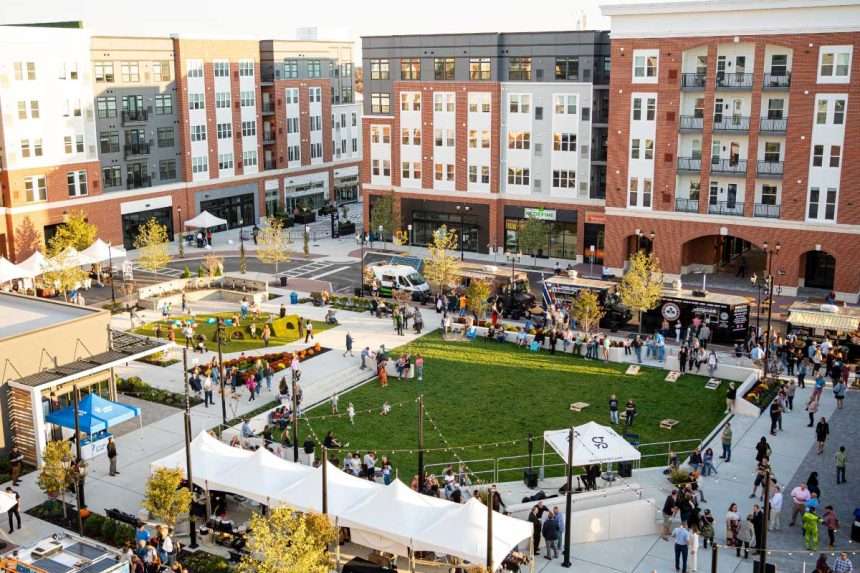
Opportunity Zones were created to attract long-term, transformative investment to communities and districts that need it most. While the program has supported lots of project types, some of the most visible and catalytic opportunities involve large-scale mixed-use developments anchored by sports or entertainment uses.
For municipalities, these projects represent more than a single building. When planned and executed well, they can create an entire district – one that targets priority redevelopment, draws visitors, supports local businesses, and generates tax revenue for decades. OZs, with their emphasis on patient capital and long-term appreciation, are well suited to this type of development.
But the tax incentive alone is rarely enough to make them happen. The communities that see the greatest results are the ones that actively shape the environment for investment and align their priorities with experienced development partners. As veterans of more than a few of these projects, here’s what we’ve learned.
Why Sports and Entertainment Anchors Fit the Opportunity Zone Model
Opportunity Zone incentives reward long-term ownership. Investors receive the greatest benefit when they hold their investment for at least 10 years, which favors projects designed to create sustained value over time.
Sports and entertainment anchors fit this model particularly well. A stadium, arena, concert venue, or youth sports complex can establish an identity for a district almost overnight. These uses also generate foot traffic, create regional visibility, and attract complementary development.
Over time, the anchor supports surrounding uses, including apartments, hotels, restaurants, offices, and retail. Then, instead of a one-dimensional project, the area becomes a destination. This “district effect” aligns closely with the OZ structure, where appreciation across multiple phases drives long-term returns.
Core Components of an Entertainment-Anchored Mixed-Use District
At the center of these projects is the primary anchor, typically a stadium, arena, performance venue, or other magnetic facility. The anchor creates the initial draw and defines the character of the district.
Around that anchor, a mix of supporting uses creates daily activity and long-term value. These often include:
- Residential units
- Hotels and conference space
- Restaurants and food-and-beverage concepts
- Experiential or service-oriented retail
- Office or flex space
The anchor creates the destination, but the mixed-use components create the everyday activity that sustains the district.
Positioning Your Opportunity Zones for Success
Cities that treat OZs as active development tools – not just designations on a map – tend to attract the most interest. Here are some suggestions for positioning yours for success:
- Identify and promote potential anchors.
Municipalities should evaluate existing or potential sports and entertainment assets, like professional or minor league teams, collegiate facilities, or youth sports complexes. The goal is to position the project as a district, not just a single facility. - Create a development-ready environment.
Flexible mixed-use zoning, pre-entitled sites, and streamlined approvals can significantly improve project feasibility. Coordinated planning for roads, utilities, parking, and public spaces should be part of the overall district strategy. - Layer incentives strategically.
Opportunity Zone benefits are most effective when combined with local tools like tax increment financing, property tax abatements, infrastructure support, or discounted public land. The strongest proposals present these tools as part of a coordinated package.
Structuring Projects for Long-Term Value
Because Opportunity Zone benefits depend on long-term holds, projects should be structured with that kind of timeline in mind.
Phased development is often the most effective approach. The anchor may come first, establishing the district’s identity and drawing initial traffic. Residential, hotel, retail, and office components can follow as demand grows.
For municipalities, this means thinking beyond the first ribbon cutting. The real value of these projects often emerges over 10 to 15 years as additional phases come online and property values increase across the district.
The Role of Public-Private Partnerships
Sports- and entertainment-anchored mixed-use projects almost always rely on strong public-private partnerships.
From the municipal side, this may include infrastructure investments, land contributions, or performance-based incentives. From the developer’s side, it requires experienced teams with a track record in complex mixed-use projects.
Clear development agreements, phased commitments, and transparent expectations help align both parties around shared goals, whether that’s job creation, housing, or long-term tax base growth.
Opportunity Zones as a Platform for Destination-Scale Development
Because they require patient capital, create long-term value, and deliver highly visible community impact, few things align more naturally with the goals of the Opportunity Zone program than sports- and entertainment-anchored mixed-use.
For municipalities, the path to success is straightforward: reduce uncertainty/risk, reduce friction, plan infrastructure carefully, and position the OZ as part of a broader district strategy.
When cities and developers work together with a long-term vision, Opportunity Zones can become powerful platforms for building places people want to visit, live, and invest in for decades.
To learn more about aligning your Opportunity Zone for sports- or entertainment-anchored mixed-use development, contact McCullers Group president Mark McCullers at mark@mccullersgroup.com.


