
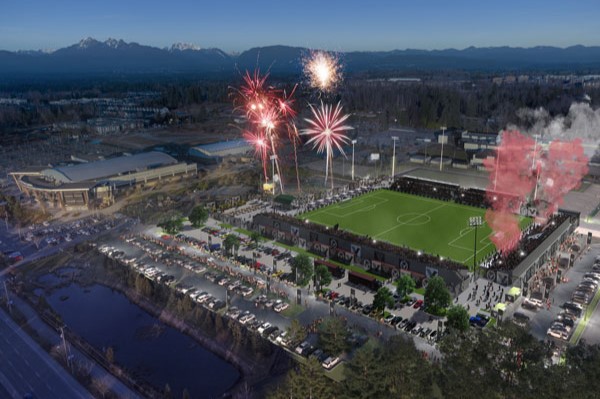
There are reasons why private developers aren’t building stadiums across the country. Without a robust event program that minimizes “dark days” across the calendar (we call it “making the building sweat”), they just don’t cap rate at a suitable level. It takes the right operating infrastructure and revenue-generating amenities to achieve this crucial objective (which, it turns out, also supports public investment in these valuable community assets).
Multi-purpose design and robust program development are the best ways to ensure these facilities support a broader range of uses so communities can host a diverse calendar of events across the entire year. For midsize markets in particular, it’s the key to creating facilities that address multiple needs and deliver long-term value.
So, how do you do that? Here are the “why” and “how.”
Why To Do It
There are lots of reasons multi-purpose facilities make sense, but here are three of the biggest:
Year-Round Revenue
Single-sport facilities have limited calendars. A baseball stadium with 70 home games or a soccer venue that hosts 20 matches leaves a lot of nights with the lights off. Multi-use design turns that gap into opportunity. When a stadium can seamlessly switch among sports, concerts, and community events, it drives consistent revenue streams — from ticket sales and concessions to parking and sponsorship. That means maximum return on investment for both public and private stakeholders.
Community Ownership
Communities benefit most when a stadium feels like their space. A family watching their high school senior walking across the stage at graduation, friends attending a summer concert, and fans cheering at a weekend match should all feel equally at home. Designing with multi-functionality in mind makes the facility more inclusive and increases community interest and use.
Easier Sell
Public investment in sports infrastructure is often scrutinized. But when a venue clearly serves the broader public — not just an owner or a team — it becomes an easier proposition. Multi-use stadiums should be active civic assets, not just sports venues. That framing can make all the difference in building consensus around funding and support.
How To Do It
Now that we’ve covered why multi-use facilities make sense, let’s look at some best practices for making them work.
Site Selection
Where the stadium sits matters as much as how it’s built. A centrally located venue with good transit access and walkability integrates more naturally into the community. Surrounding amenities — from restaurants and retail to hotels and residences — amplify the stadium’s ability to attract events and visitors. Remember, you’re creating a destination, not just a building.
Integrated Infrastructure
A stadium’s backbone should be designed to support both sporting and non-sporting events. That means efficient back-of-house areas for production crews, robust broadcast capabilities, strong Wi-Fi for streaming and social engagement, and sponsor-friendly spaces that can adapt to different activations. Premium seating, suites, and club spaces should also be designed with flexibility so they can double as rental-event spaces year-round. Design features like these are critically important to attract signature events like regional and national championships in multiple sports, plus ancillary events and activities that require specific operational capabilities.
Built-In Flexibility
From flex spaces that can serve multiple purposes and areas that can accommodate expanded seating to hybrid field surfaces that can be configured to accommodate unique events and withstand quick turnarounds, flexibility is essential. Being logistically efficient is key, too, allowing the building to be turned quickly and, importantly, cost effectively – which is attractive to prospective event promoters.
Functional Aesthetics
No event should appear to be an afterthought for your facility. It needs to look and feel like it was packaged for the product and meant for each event’s unique purpose. Every event organizer is understandably uber-focused on their guests’ experience. So from entering the facility to purchasing food or merchandise (even using the restroom) should be designed for logistical efficiency and functional aesthetics.
Behind-The-Scenes Efficiency
Back-of-house areas should be organized so that key building operational areas are located and situated for efficiency. Food service, waste management, building maintenance, and event operations should be thoughtfully organized with multiple event users in mind. Infrastructure like electrical capacity, technology, media, and loading docks should be planned to accommodate concerts and community events as easily as they do sports. Make the building easy to use for tenants and your market for special events will expand.
Sightlines & Proximity
Good sightlines are non-negotiable. Whether the crowd is watching a soccer match, a commencement speaker, or a touring band, every seat should offer a clear view. Smaller stadiums have the advantage of intimacy — keeping fans close to the action. This proximity enhances the live experience and creates memories that bring people back.
Unique Experience Spaces
Modern venues are more than a single bowl of seats. Exterior plazas, wide concourses, balconies, and terraces all provide flexible gathering points that can be activated differently depending on the event. A plaza can host a farmers’ market on a Saturday morning, a fan zone before a match, and a food truck rally during the summer. Designing for these zoned experiences creates a stadium that feels alive beyond ticketed events.
When done thoughtfully, multi-use stadiums become economic drivers and cultural landmarks. They bring vibrancy to downtowns, generate consistent revenue, and foster civic pride. But they also demand foresight. That’s why working with an advisor like McCullers Group pays big dividends. We work with city managers and community leaders, as well as developers, operators, architects, engineers, and contractors, to ensure flexibility, accessibility, and integration from day one. Because that’s the collective, cooperative effort it takes to deliver a stadium that doesn’t just serve a single purpose or a single team, but an entire community.


