
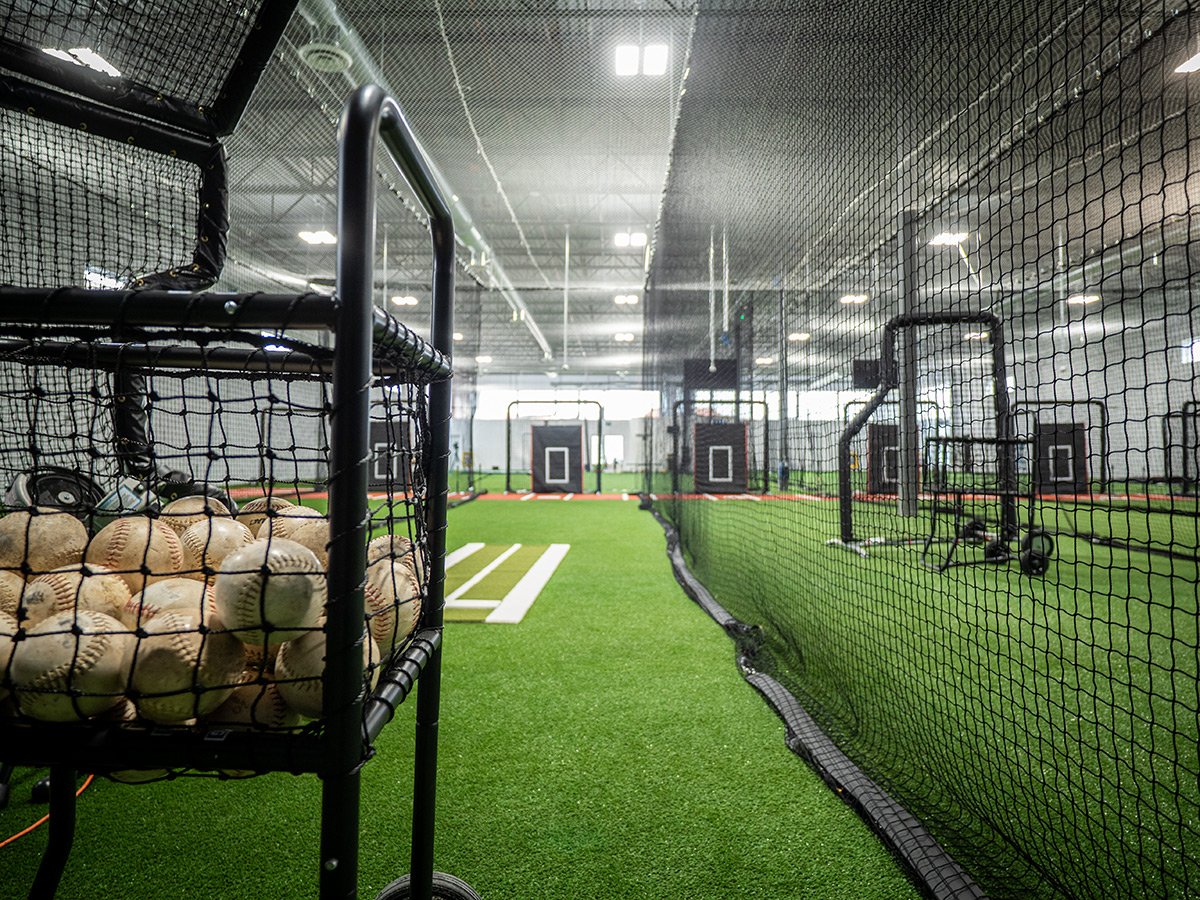
For progressive sports organizations today, player development is no longer just about having practice fields, weight rooms, and rehab spaces. It is about creating a fully integrated environment where performance, health, analytics, and culture work together and reinforce each other every day.
Most current facilities were built for a different era. Legacy training complexes, fragmented campuses, and disconnected departments may have worked in the past, but they’re often impediments to modern player development. As teams compete for talent, performance advantages, and long-term success, the facility itself has to become a strategic asset.
So how do you turn facilities from places where athletes simply train to environments that actually shape outcomes?
Moving Beyond Fragmented and Outdated Environments
A surprising number of organizations still operate across multiple buildings or outdated training setups that were never designed for today’s player development demands.
When coaching staff are in one building, ATs in another, and strength, conditioning, and analytics are somewhere else entirely, collaboration becomes harder. Information gets delayed. Decisions take longer. Those small inefficiencies add up quickly over the course of a season.
This fragmentation can be especially challenging during the narrow offseason window and spring training when teams need to assess, plan, and prepare for the following season. In many cases, the issue isn’t a lack of talent or expertise – it’s that the physical environment makes it harder for people to work together effectively.
Modern player development requires a modern operating platform.
Bringing Performance, Medical, and Analytics Under One Roof
The goal for many teams is clear: create a centralized environment where training, rehab, sports science, biomechanics, and analytics are fully connected.
The challenge, however, is rarely just square footage.
Success depends on adjacencies, workflow, and how information moves. A biomechanics lab placed far from the training field or floor loses efficiency. A medical staff separated from strength and conditioning misses opportunities for faster intervention. Analytics are only valuable if coaches and players can access and apply insights in real time.
The best facilities are designed around decision-making, not just departments. They create natural touchpoints between disciplines so that collaboration happens by design, not by accident.
That level of intentional planning can make the difference between a building that looks impressive and one that actually improves player outcomes.
Designing for Year-Round Utilization
Historically, many baseball facilities were designed primarily around spring training. Today, the expectation is very different.
Player development is now a year-round priority. Facilities must support major league players, prospect development, rehab assignments, offseason performance programs, and individualized training plans across the calendar.
That means spaces need to function with flexibility and purpose in every season.
Recovery areas must support both in-season rehabilitation and offseason performance work. Strength spaces need to serve elite veterans and young prospects alike. Meeting rooms, nutrition areas, and support spaces must handle constant use, not just a few months of peak activity.
The facility should not feel like a seasonal destination. It should operate like a year-round performance headquarters. Facilities in Florida and Arizona need to have the flexibility to be used beyond February and March which requires adaptable indoor spaces.
Facilities as a Talent Attraction and Retention Tool
Player’s notice facilities—and they talk about them. The often controversial but always enlightening players’ polls bear that out.
A best-in-class development environment has become a recruiting advantage, both for athletes and high-level staff. Players want confidence that their organization is investing in their growth, health, and long-term success. Coaches, trainers, and analysts want environments where they can do their best work.
If a facility feels outdated, disconnected, or clearly behind competitors, it can create a real disadvantage. Because facilities now play a direct role in organizational brand.
Integrating Technology Without Overbuilding
There’s understandable excitement around biomechanics labs, motion-capture systems, force plates, player tracking technologies, and advanced performance monitoring tools.
But technology alone doesn’t create better development.
Too often, organizations add standalone systems without a clear plan for how they connect to daily operations. The result is expensive equipment that becomes underused, isolated, or difficult for players and coaches to adopt.
The goal should be integration, not accumulation.
Technology should support a seamless player journey – from assessment to coaching intervention to measurable progress. It should feel embedded in the environment, not bolted onto it.
Smart planning helps teams avoid overbuilding in the present while still creating meaningful competitive advantages and allowing for flexibility in the future applications of new and improved technology.
Building for Flexibility and Capital Efficiency
Player development models are evolving quickly. What feels cutting-edge today may feel outdated in five to ten years. That makes flexibility one of the most valuable design principles.
Adaptable training spaces, modular rooms, scalable infrastructure, and thoughtful phasing allow organizations to evolve without starting over. Future-proofing is less about predicting every change and more about building a facility that can respond to change.
At the same time, capital efficiency matters.
Every dollar must be justified. Player development is an indirect return on investment but is necessary to enhance the demand for ticket sales, premium seating or sponsorship assets. The ROI of player development facilities is tied to performance, availability, and putting a product on the field that fans will be proud of and invest in.
That makes prioritization essential. Not every investment needs to happen at once. Strategic phasing can help organizations focus first on the highest-impact improvements while preserving flexibility for future growth.
In the end, the strongest player development facilities aren’t simply bigger or more expensive. They’re smarter, more connected, and built around how elite performance actually happens.
That’s where the competitive advantage lives.
McCullers Group recently worked with Major League Baseball’s Baltimore Orioles on their new high-tech, year-round player development facility in Sarasota, Florida. Learn more about the project here or contact Director of Development Kurt Eklund at kurt@mccullersgroup.com.


