
When a community or organization decides to develop a new sports or entertainment venue, the spotlight naturally falls on the architect who will design it and the contractor who will build it. And for good reason.
You rely on great architects to bring vision, experience, creativity and technical expertise; great contractors to bring practical knowledge, problem-solving ability and the experience required to turn that vision into reality; operators to understand how the venue needs to function on event day; and engineers to solve the technical challenges that enable these massive projects.
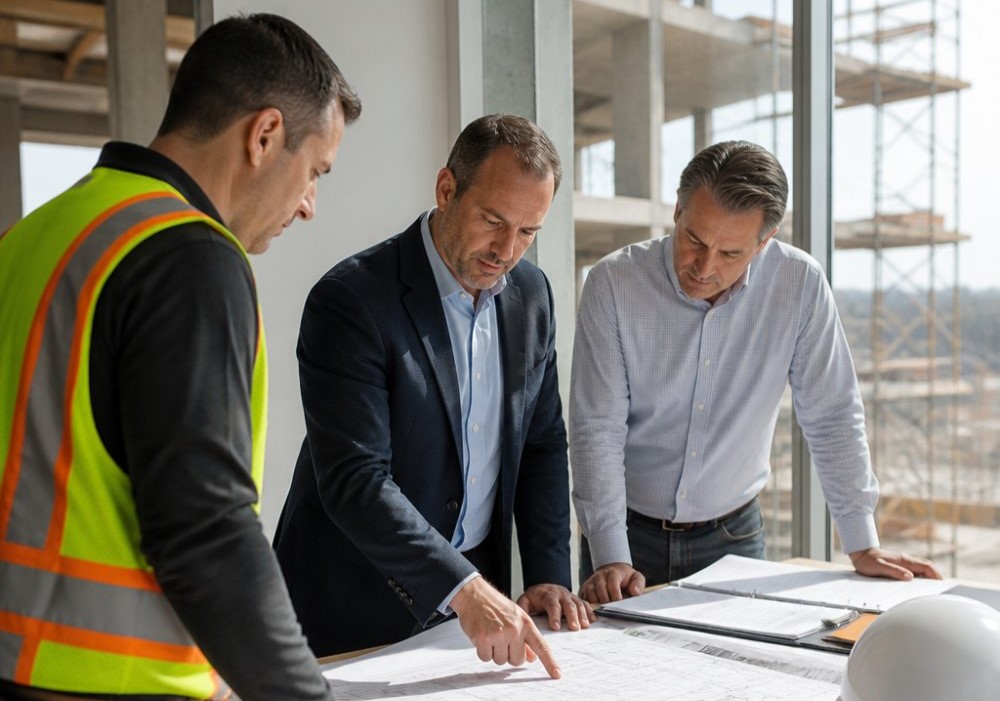
For a successful project, all these professionals need to work seamlessly to deliver a project that meets the community’s needs and expectations on time and within budget. That’s where an experienced owner’s representative can provide tremendous value not by augmenting the expertise of the architect, engineer, contractor, or operator, but by purposefully and deliberately synthesizing their collective expertise around the owner’s vision.
Building a successful sports or entertainment venue isn’t simply about assembling talented professionals, it’s about getting those groups aligned around the right decisions for the right reasons at the right time. At McCullers Group, that’s the secret sauce, and here are some of the ingredients:
Starting With the Owner’s Objectives
Every successful venue project begins with a vision. But a vision isn’t a project yet. The owner has to translate that vision into a business case, a budget, a schedule, a delivery strategy and ultimately a facility that can operate successfully for decades. That requires a lot of important decisions well before construction begins.
What will the venue cost? How should it be delivered? When should the contractor get involved? What procurement approach will attract the right team? What assumptions underpin the financial model? What operational requirements need to be incorporated into the design? An owner’s rep should help the owner navigate those questions while drawing on the expertise of the entire project team.
The goal isn’t to tell the architect how to design or the contractor how to build. It’s to make sure everyone understands what the owner is trying to accomplish, and that all the major decisions support those objectives.
Seeing the Different Parts of the Picture
One of the great strengths of a multidisciplinary project team is that everyone brings a different perspective.
An architect may be thinking about design, functionality and the experience of the people using the building. Engineers are solving complex technical and infrastructure challenges. Contractors are thinking about constructability, sequencing, procurement and cost. Operators are thinking about how the venue will actually function during events.
The owner’s representative has to connect those perspectives.
For example, a design decision that makes perfect sense architecturally may have implications for staffing or maintenance. A construction approach that saves money in one area may create operational costs somewhere else. A feature that enhances the fan experience may also require additional infrastructure.
One of the owner’s representative’s most important roles is to bridge the gap between disciplines and ensure that a decision being made is not made in a vacuum and does not negatively impact the other disciplines. The challenge is making sure the implications are understood before the decision’s made.
Expediting With Experience
Complex projects generate thousands of decisions. Experience doesn’t eliminate those decisions. It helps teams make them more efficiently.
An experienced owner’s rep knows what questions are likely to arise, where projects commonly encounter delays, and which decisions need to be made early to keep the project moving. That can be particularly valuable when establishing the schedule to ensure the team is working on common issues before they have a chance to percolate into a larger problem.
Opening a new stadium in two years may sound achievable. But a credible schedule has to account for permitting, design, procurement, funding, construction, and the many interdependencies among them. There are a lot of hurdles that need to be cleared to achieve these schedules. An experienced owner’s representative can help establish a schedule based on what similar projects have actually required and identify opportunities to accelerate the process where that’s realistic.
The objective isn’t simply to move faster. It’s to move faster with fewer surprises.
Having a Delivery Strategy
One of the earliest and most consequential decisions is determining how the project will be delivered.
Design-Bid-Build, Design-Build, and Construction-Manager-At-Risk (CMAR) approaches each have different characteristics. For a relatively straightforward building, the Design-Bid-Build approach may work well. For a complex project like a sports venue, though, a Design-Build or CMAR approach increases collaboration.
Bringing a contractor into the process early can provide valuable input on constructability and budgeting while the design is still developing. A good owner’s rep can help evaluate those options, assist the procurement strategy, prepare requests for proposals, evaluate competing teams, and recommend the approach that best fits the project’s objectives.
That process isn’t about finding the “best” delivery method in the abstract. It’s about finding the best delivery method for this owner, this project, this market, and this schedule.
Protecting the Budget
Once design begins, financial discipline becomes a shared responsibility. The architect, contractor, and other consultants all have important roles in managing project costs. The owner’s representative should add owner-side oversight.
That includes tracking the budget, reviewing pay applications, evaluating change orders, monitoring requests for information, and making sure unresolved issues get addressed.
The value isn’t simply responding to problems; it’s identifying them early enough to address them before there are major impacts to the budget or schedule.
Bringing Specialized Experience
Sports and entertainment projects require knowledge that isn’t always available through conventional real estate benchmarks. A financial model might include assumptions about attendance, ticket revenue, premium seating, sponsorships, concessions, and other venue economics. But determining whether those assumptions are reasonable requires an understanding of how comparable teams and venues actually perform.
That kind of experience can help owners test assumptions and better understand risk. It can also help the project team understand the operational implications of design and development decisions.
A soccer-specific stadium has different requirements from a hockey arena. An entertainment venue has different operational priorities from either. The more specialized the project, the more valuable that specialized experience becomes.
Making Everyone Better
The strongest owner’s rep isn’t the one who dictates to the project team. It’s the one that marshals the team and allows them to perform at their best.
That means asking the right questions. Making sure information reaches the people who need it. Connecting financial, operational, design, and construction considerations. Helping the owner make informed decisions. And creating accountability without creating unnecessary friction.
In that sense, the owner’s representative is less like a referee and more like a team captain – someone focused on keeping different disciplines aligned while making sure the team never loses sight of the objective.
That objective ultimately belongs to the owner. For municipalities and other organizations investing significant capital in a new sports or entertainment venue, assembling the right architects, engineers, contractors, and operators is essential. But so is having someone dedicated to connecting those experts to the owner’s vision and focused solely on protecting the owner’s interest.
Great venues don’t happen because one person has all the answers; they happen because the right people are asking the right questions, sharing the right information, and making the right decisions together.
An experienced, specialized owner’s rep helps make that possible. And in a project measured in tens or hundreds of millions of dollars and decades of community impact, that can be one of the most valuable investments a community or owner makes.
Looking for a specialized owner’s representative for your next project? Contact McCullers Group Director of Development Kurt Eklund at kurt@mccullersgroup.com.


